Home / Markets / Utility-Scale Solar

Your field's underground scope, de-risked.

Horizontal directional drilling for utility-scale solar EPCs, developers, and GCs. The bore is on the critical path. We make sure it never holds up your COD.

On a utility-scale solar field, energization waits on the underground. Collection crossings and the gen-tie into the point of interconnection gate every milestone behind them, so a slipped bore slips the whole schedule. RMDT removes that risk: prequalified crews, owner-operated rigs, a written frac-out plan, and one team carrying collection, crossings, and interconnection across the site.

12
Utility-scale solar fields
500K+
Feet bored
100+
Bores on schedule
0.86
EMR
// WHY THE BORE GATES ENERGIZATION

The underground scope your COD depends on

Every utility-scale solar project runs against a date. A commercial operation date in the EPC contract. An energization window with the utility. PPA terms that start the clock the moment the field comes online. The schedule is built backwards from that date, and the underground work sits closer to the start of it than most teams plan for.

That is the part procurement teams underprice. Modules, racking, and inverters can be sequenced and resourced. The bores that carry your medium-voltage collection across roads, rail, and water, and the gen-tie that ties the field into the point of interconnection, are the scope that no amount of crew on the array can pull forward. If a road crossing or the interconnection bore is not in the ground, the conductor behind it cannot be pulled, the circuit cannot be terminated, and the field cannot be energized. The bore is on the critical path, and the commercial operation date set in the interconnection agreement does not move with it.

Why HDD lands on the critical path

Horizontal directional drilling is how the collection and interconnection scope crosses everything you are not allowed to open-cut: state and county roads, active rail, rivers and streams, wetlands, sensitive ground, and existing utilities you cannot risk hitting. Those crossings are permitted, witnessed, and inspected, which means they are also the points where a schedule is most exposed.

  • Collection crossings gate the circuits behind them. A 34.5kV duct bank under a road has to be in and proofed before the conductor is pulled and the string is closed out.
  • The interconnection bore gates the whole field. The gen-tie into the POI, substation, or switchyard is singular. Nothing energizes until it is in and terminated to the interconnection and interoperability standard the utility enforces at the point of interconnection.
  • An inadvertent return stops work. A frac-out on a sensitive crossing means containment, agency notification, and lost days, on a bore that was already pacing the job.
  • A subcontractor interface adds slack you did not plan for. Every handoff between a driller, a fluid vendor, and a survey crew is a place where a date can move.

What gating risk looks like on a field

  • The interconnection bore is the last crossing scheduled, and it is the one the entire energization date hangs on.
  • A collection crossing under a road or rail line is held for a permit, a flagger, or a witness, and the conductor pull behind it waits.
  • Geotech surprises at a water crossing force a redesign mid-bore because no fluid program or contingency was written up front.
  • A frac-out on a wetland crossing triggers containment and agency reporting, and a one-day problem becomes a one-week problem.
  • A drilling sub demobilizes between crossings, and remobilization sits on the schedule for days.

How RMDT takes the risk off your schedule

We are built to be the part of the field you stop worrying about. The approach is the same on every project.

  • Prequal is already cleared. We are prequalified in ISN and Avetta, carry $5M / $2M insurance with additional-insured and COI ready and scalable on request, hold Class A contractor licenses in CA, OR, and WA, and run a 0.86 EMR with zero OSHA recordables over three years. Your gate is closed before kickoff, not during it.
  • Owner-operated rigs and crews. We own our rigs and run our own people. That removes the subcontractor interface risk, the demob-remob gaps, and the finger-pointing when a date is at stake. One accountable team, start to finish.
  • A written inadvertent-return plan. Before we drill, you get it in writing: geotech read, drilling-fluid program, monitoring, containment, and contingency. Frac-out risk is managed on paper before it becomes a problem in the field.
  • One crew across the whole underground scope. Collection crossings, road and rail and water crossings, and the interconnection bore are run by the same crew under one schedule. No handoffs, no seams, no slack hiding between vendors.

What we deliver across a field

From mobilization to a proofed, as-built crossing, we cover the full underground scope of a utility-scale solar build:

  • HDD crossings under roads, rail, rivers and streams, wetlands, sensitive ground, and existing utilities.
  • 34.5kV medium-voltage collection, duct banks, conduit, and fiber and SCADA pathways.
  • Interconnection and gen-tie bores into the point of interconnection, the substation, and the switchyard.
  • Vacuum excavation and subsurface utility engineering, potholing and daylighting to verify existing utilities before we cross them.
  • A written frac-out plan, a fluid program, and as-built documentation that holds up at inspection.

The result is schedule certainty on the one scope that can quietly move your energization date. We carry the underground so you can hold the COD. We always hit the mark.

// WHAT WE COVER ON YOUR FIELD

One crew, the full underground scope

Four capabilities, one accountable team, one schedule. Explore how each scope is run.

// SCHEDULE CERTAINTY

Built to be the scope you stop worrying about

Owner-operated rigs, a written frac-out plan, and prequal already cleared. We run the bores that gate your field so the underground never becomes the line item that moves your date.
  • Prequalified in ISN and Avetta, COI ready on request.
  • Class A licensed in CA, OR, and WA, bi-coastal with a Central New York presence.
  • 0.86 EMR, zero OSHA recordables over three years.
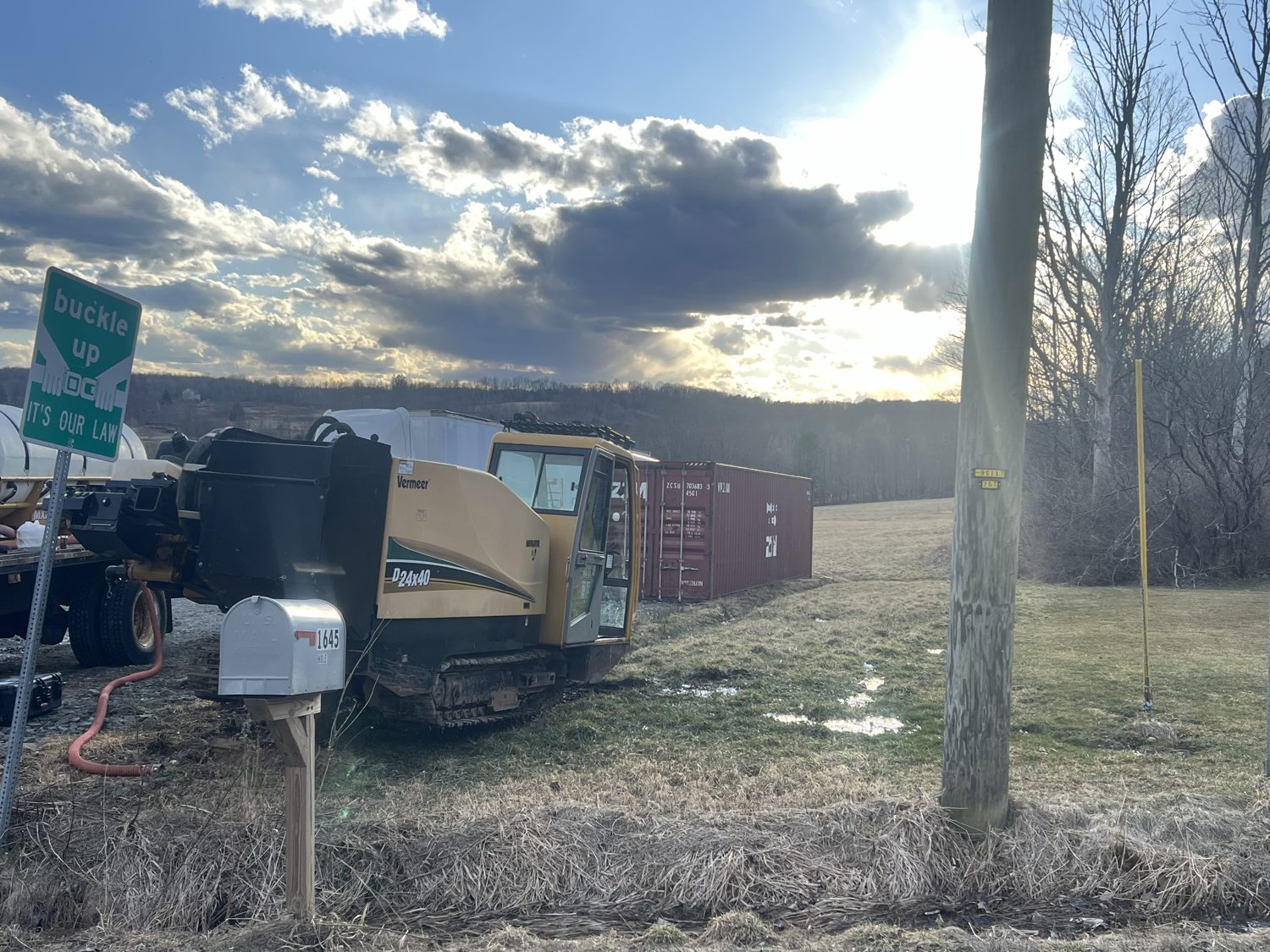
RMDT horizontal directional drilling rig and crew working a crossing on a utility-scale solar site
// STANDARDS & REFERENCES

Standards and references

Our collection and interconnection bores are planned and executed to the standards and milestones the utility-scale solar industry runs on. Useful references:

  • FERC interconnection rule — governs the large-generator interconnection process and the commercial operation date our underground scope is sequenced against.
  • IEEE 1547 — the interconnection and interoperability standard the utility enforces at the point of interconnection where the gen-tie terminates.
  • SEIA — Utility-Scale Solar — industry reference on how utility-scale solar fields are developed, built, and brought online.
  • NREL — the U.S. national lab whose research informs utility-scale PV cost, performance, and life-cycle benchmarks.
// HOLD YOUR COD

Let's keep the bore off your critical path

Send us the field. We will tell you exactly how we take the underground scope off your schedule.

Request capabilities