Trenchless crossings under the obstacles that hold up a solar field: roads, rail, rivers, wetlands, and live utilities. Engineered bore plan, owner-operated rigs, written frac-out plan.
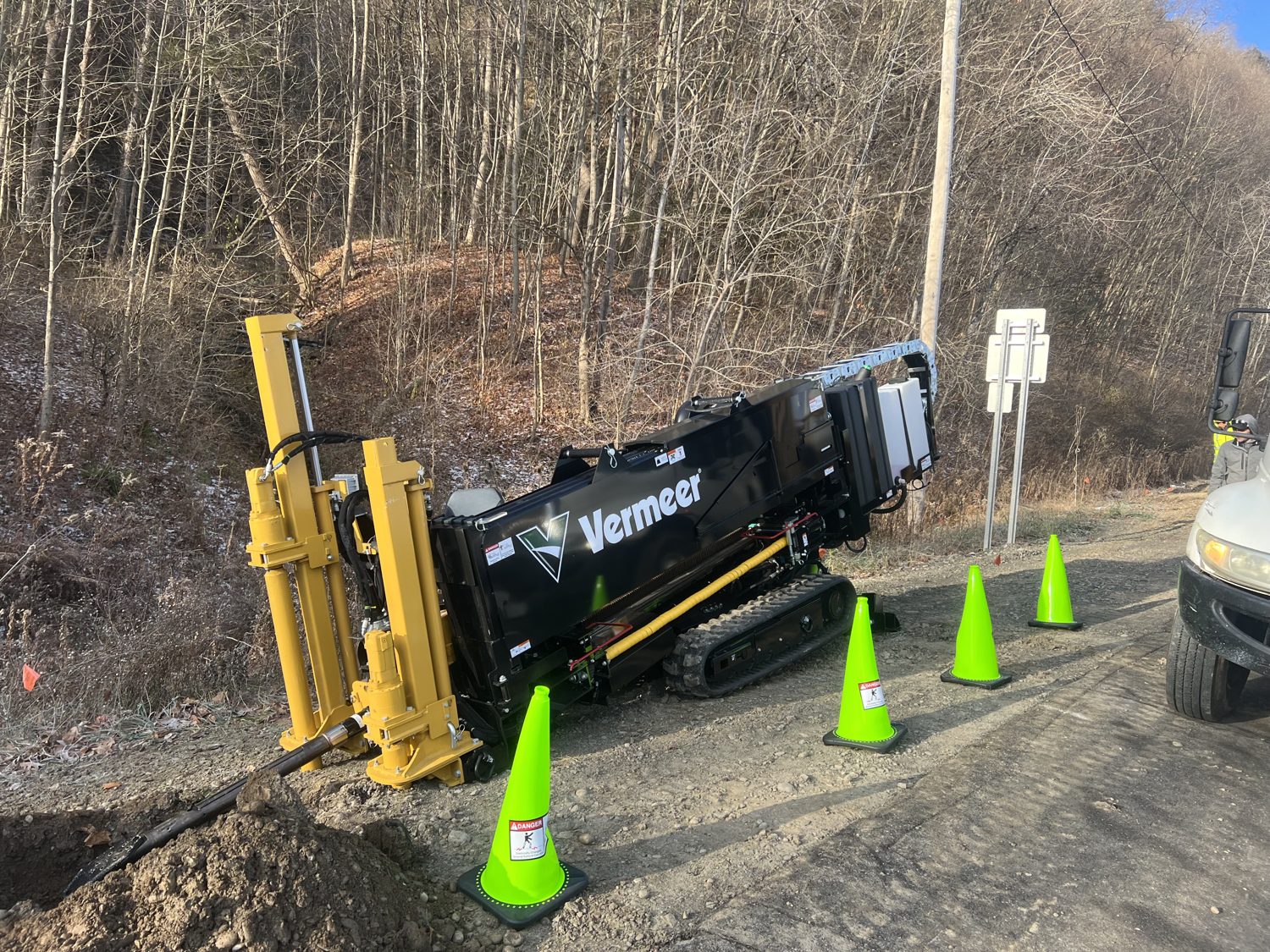
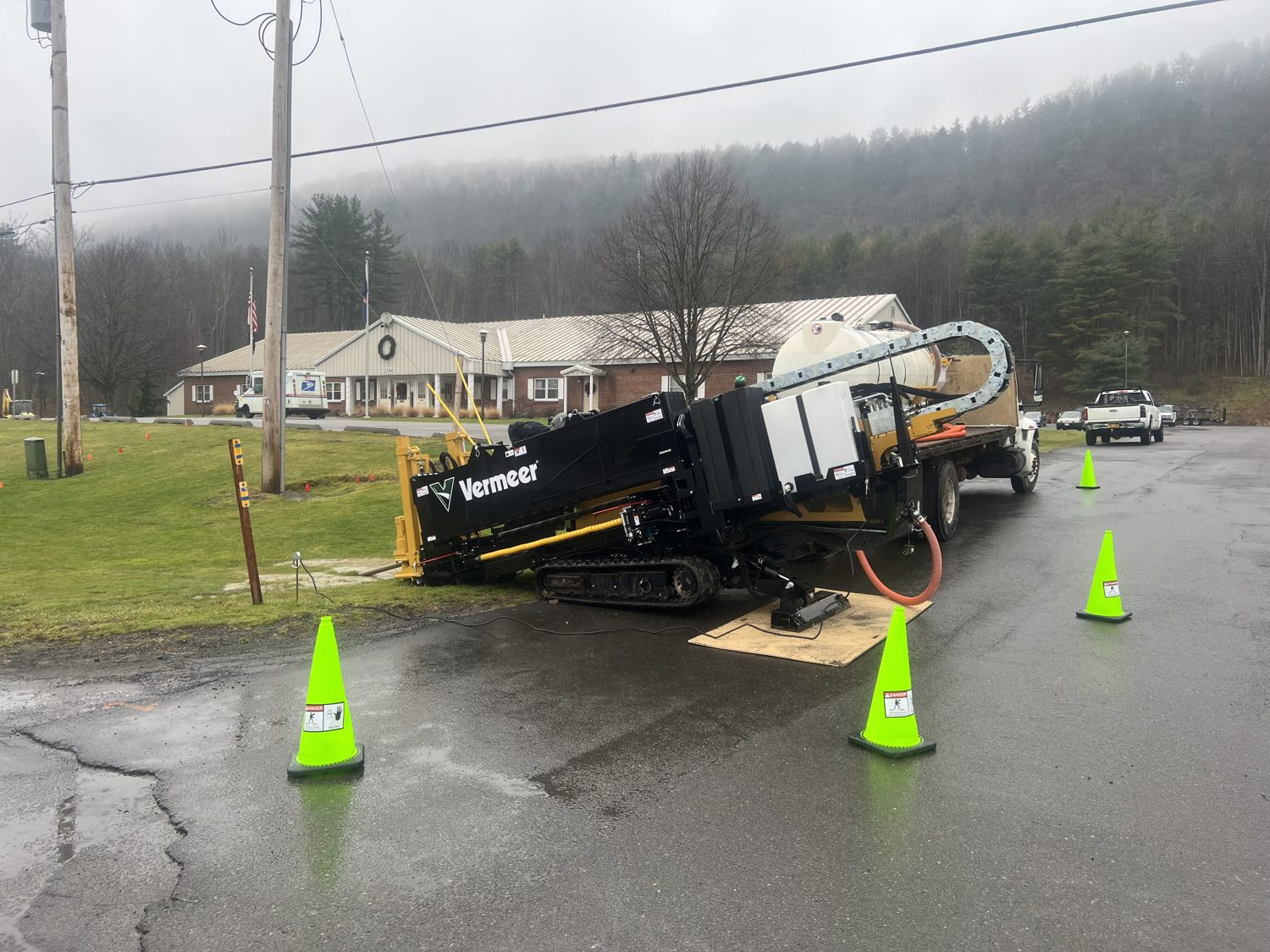
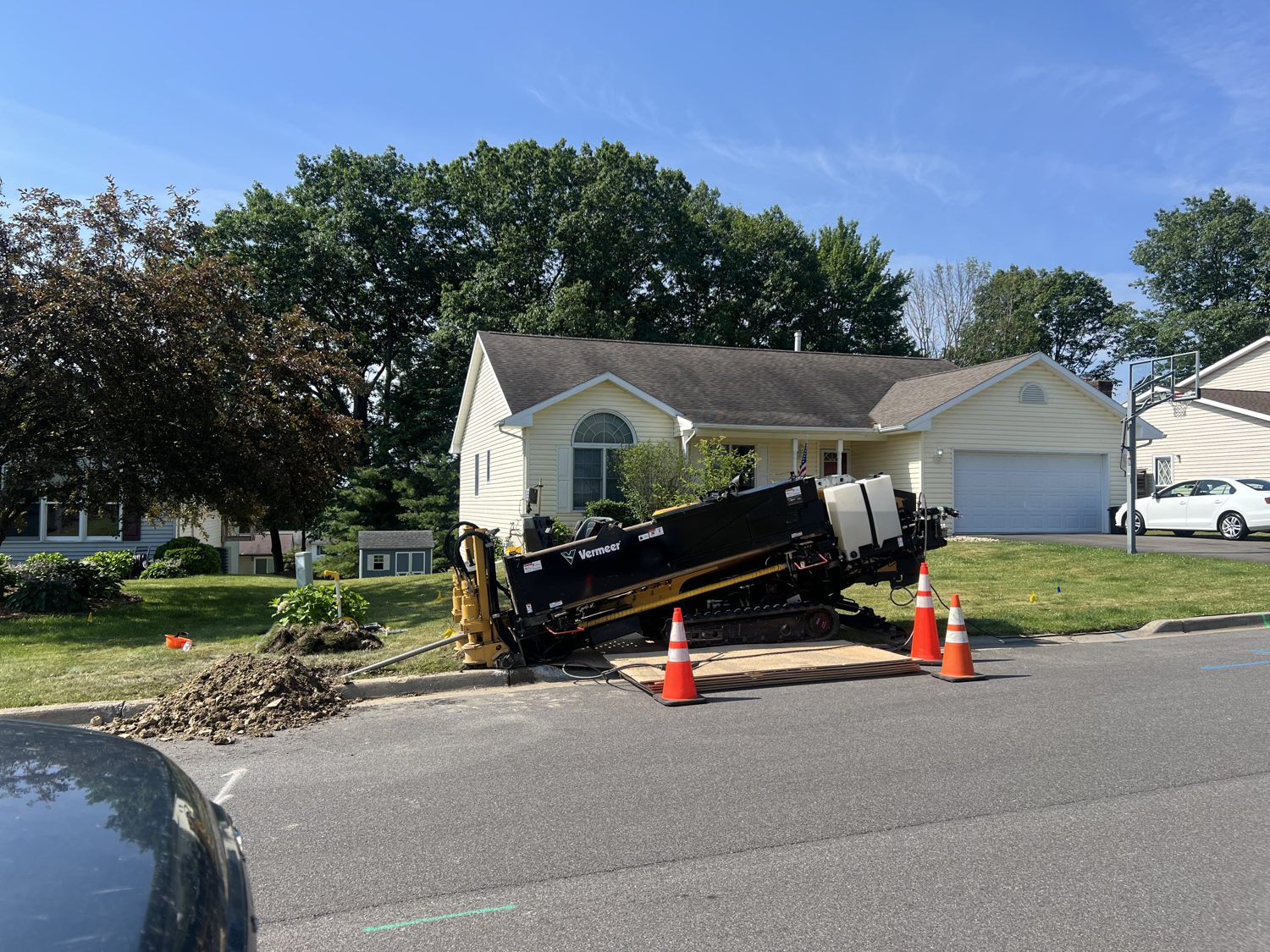
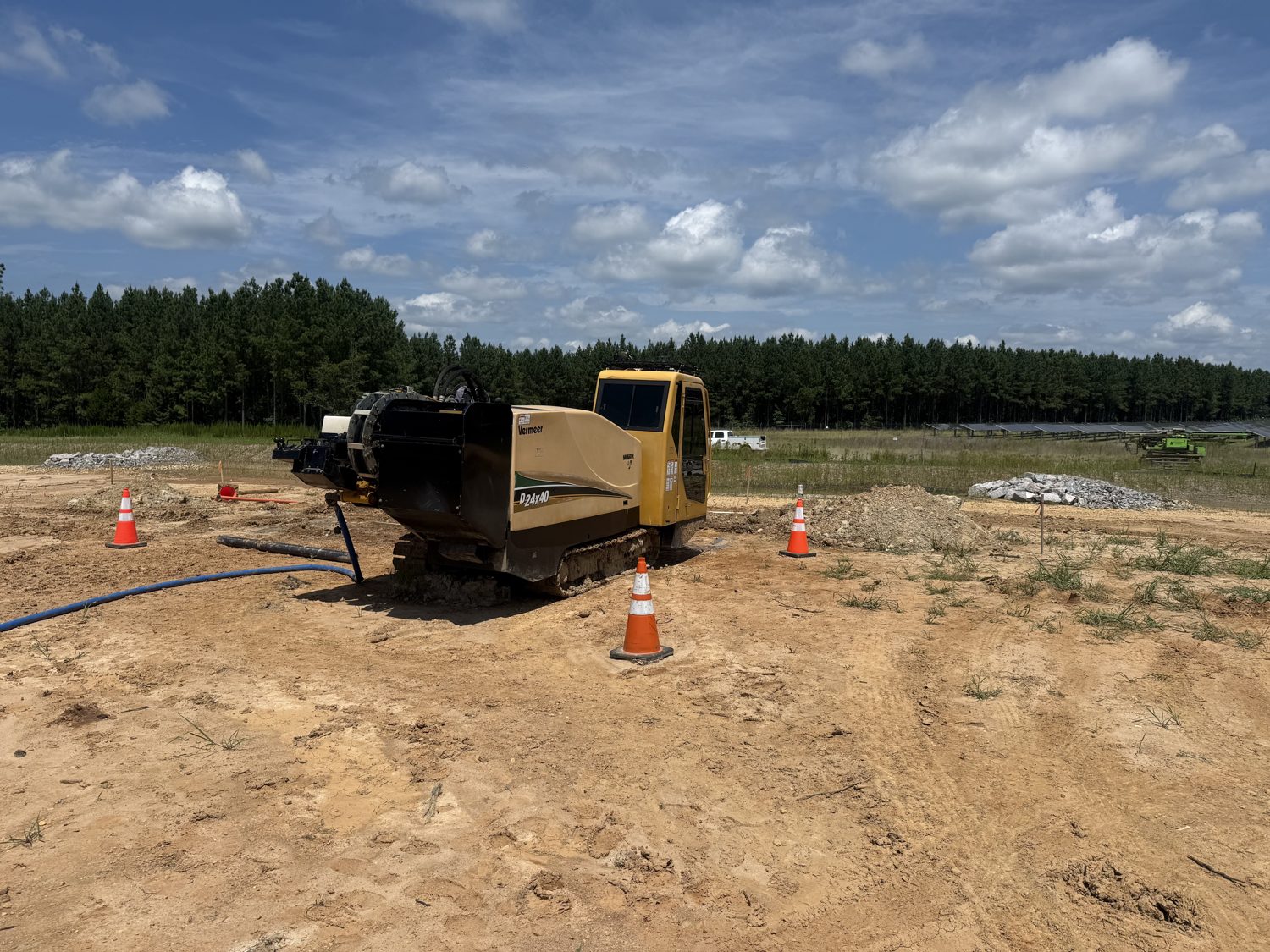
Horizontal directional drilling (HDD) is a trenchless method that installs conduit or pipe along a designed underground arc. A steerable head drills a pilot bore from an entry point, curves under the obstacle, and surfaces at an exit point. The hole is reamed to size, then the product is pulled back through it. You bore instead of trench when open-cut would cut a road, cross water or wetlands, disturb protected ground, or expose a live utility, and when the surface restoration is not worth the disruption.
Every crossing is three controlled stages. We plan the full bore profile against the geotech before the rig mobilizes, then execute pilot, ream, and pullback in sequence. The plan is the work. Field surprises are what the plan exists to prevent.
The pilot bore drills the path the product will follow. A steerable drill head, tracked by a downhole transmitter and a surface locator (or a wireline guidance system on longer or deeper shots), is steered along the designed arc. Entry angle, exit angle, depth of cover, and bend radius all come from the bore plan, which respects the minimum bend radius of the product so the conduit is never forced past what it can take. The crew reads the head's pitch, depth, and clock position on every rod and corrects steering as the bore advances, so the pilot lands on the planned exit, not near it.
The pilot hole is too small for the product. A reamer is pulled back (or pushed forward) through the bore to enlarge it, usually in one or more passes, until the hole is sized to accept the product with the clearance the pullback needs. The drilling-fluid program does the heavy lifting here: it cuts and suspends spoil, stabilizes the borehole, cools the tooling, and lubricates the pull. Reaming sequence and fluid mix are matched to the soil, sands, clays, cobble, or rock each behave differently downhole.
With the hole reamed and conditioned, the product is connected to the drill string through a swivel and pulled back through the bore in a single controlled pull. For solar work this is typically fused HDPE conduit or a bundled duct package carrying medium-voltage collection, fiber, or SCADA. The conduit is fused and pressure-checked on the surface, laid out in line with the bore, and pulled in one continuous operation so there are no joints left in the ground to fail later.
A bore is only as safe as the picture of the ground around it. Before we drill, we call in one-call locates and then verify the marks ourselves with vacuum excavation and potholing, exposing the actual depth and position of any utility the bore passes near or under. Guesswork at the locate stage is how strikes happen, so we daylight the conflicts rather than trust paint on grass. During the bore, continuous downhole tracking keeps the head on the planned profile and clear of those located utilities by the designed separation.
HDD exists to get a clean conduit path across an obstacle that open-cut cannot, or should not, touch. On utility-scale solar sites the recurring crossings are:
| Crossing | Why bore it |
|---|---|
| Roads & highways | No road cut, no lane closure, no pavement restoration, no DOT cut-permit tail |
| Railroads | Keeps the line in service and meets the railroad's bore-and-case crossing requirements |
| Rivers & streams | Keeps the conduit below the scour zone with no in-water work or bank disturbance |
| Wetlands | Spans the resource with no fill and no surface trench through protected ground |
| Protected habitat | Avoids ground disturbance across sensitive or permitted habitat corridors |
| Existing utilities | Passes under live gas, water, electric, or fiber at the designed separation |
Geology decides the tooling, the fluid, the pace, and the risk. The geotech report is the first thing we read, and it changes the plan in concrete ways:
An inadvertent return, or frac-out, is drilling fluid finding a path to the surface instead of staying in the bore. It is the single biggest environmental risk in HDD, especially under water and wetlands, and it is preventable with planning. Every crossing carries a written inadvertent-return plan before the rig turns: a geotech read of the ground, a drilling-fluid program matched to that ground, downhole pressure and annular monitoring during the bore, containment staged and ready at the surface, and a written contingency that says exactly what the crew does if a return shows. We treat the plan as a field document, not a binder. The full method, monitoring, and response protocol lives on our safety page.
We run an owner-operated fleet, not a single financed drill rig waiting in line behind someone else's job. The crew that plans the bore is the crew that drills it, which is how a bore profile actually survives contact with the field. That control is what lets us sequence pilot, ream, and pullback against the rest of the solar build so the crossing lands exactly when the trades downstream of it are ready.
The bore is on the critical path. We make sure it never holds up your COD.
Per foot, HDD usually carries a higher unit cost than open-cut trenching. The comparison that matters is total installed cost. A bore avoids road cuts, traffic control, surface restoration, dewatering, environmental remediation, and the schedule risk of an open obstacle. Where a crossing touches a paved road, an active rail line, water, wetlands, or a live utility corridor, the bore is frequently cheaper once those avoided costs are counted, and it removes a permitting and restoration tail from the critical path.
It depends on geology, the product being installed, and the entry and exit geometry available. Short utility crossings and long river or wetland crossings both fall within owner-operated rig capacity, and conduit diameters scale with the duct or pipe package the design calls for. Rather than quote a fixed maximum, we run a bore plan against the geotech and the product spec and confirm the design is achievable before mobilization.
We bore in sands, silts, clays, mixed glacial soils, cobble, and rock, and we plan for a high water table. Each profile changes the drilling-fluid program, the steering approach, and the reaming sequence. Clean sands and clays steer predictably; cobble and rock call for the right tooling and pace; saturated ground raises inadvertent-return risk and gets a tighter fluid and monitoring plan. The geotech report drives those choices before the rig moves.
We coordinate one-call locates, perform our own potholing and vacuum excavation to expose conflicts, and support the crossing-permit packages the agency or railroad requires. The owner or EPC typically holds the master permits; we provide the bore profiles, fluid plans, and method statements those reviews need, and we follow agency conditions in the field. Specifics are confirmed per project and provided on request.
It depends on length, diameter, geology, and the number of ream passes. A short road crossing can finish inside a single shift, while a long water or wetland crossing with multiple reams runs across several days. We sequence pilot, ream, and pullback against the rest of the field schedule so the crossing lands when the trades downstream of it are ready, not before and not after.
Our crossings are planned and executed to the trenchless standards and damage-prevention practices the industry relies on. Useful references:
Roads, rail, water, wetlands, live utilities. Give us the obstacle list and the geotech, and we'll confirm the bores are achievable before anyone mobilizes.
Request capabilities RMDT Utilities